The amenity checklist is one of the most effective and least reliable ways to choose a hotel. Properties know that certain words move bookings. “Infinity pool.” “Rooftop bar with city views.” “Spa with indoor heated pool.” These features appear prominently in marketing because they work, not necessarily because they deliver what the image implies.
Here’s an honest assessment of which hotel amenities consistently justify the premium associated with having them, and which ones are typically the least reliable gap between promise and experience.
Infinity Pools: The Gap Between Photo and Reality
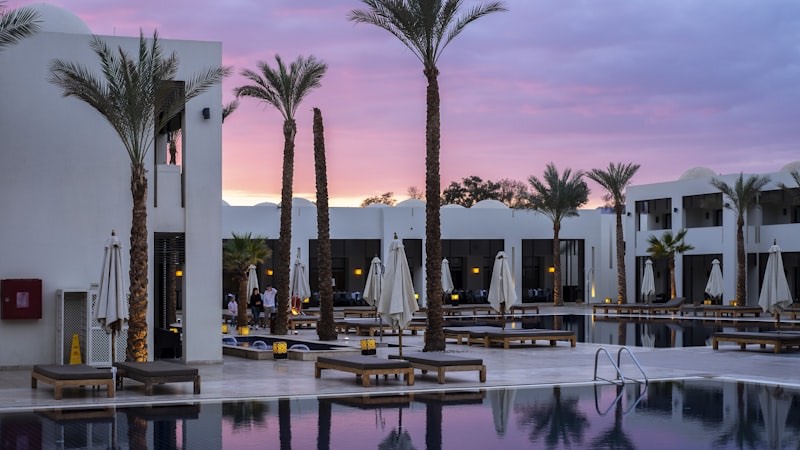
The infinity pool is the most heavily photographed hotel amenity in the world and among the most inconsistently delivered.
What the marketing photo shows: a serene reflecting surface extending to a sea or mountain view, perhaps a single swimmer or an empty expanse at golden hour.
What you often get: a pool that’s genuinely beautiful from certain angles but smaller than implied (the telephoto lens compresses scale dramatically), crowded from 10 AM to 5 PM in peak season with sun loungers at a premium, and a view that requires standing at the exact overflow edge to experience the infinity effect.
Where infinity pools actually deliver: small boutique properties with 20 to 30 rooms maximum, where pool access is naturally limited by guest count. Six Senses and Alila properties both manage this well. Also: properties where the infinity pool faces a specific and exceptional view (not just “sea” but a particular bay, cliff, or rice terrace configuration that genuinely frames the water). The Amankila in Bali, certain cliffside properties in Santorini, the Six Senses Yao Noi in Thailand.
The tell for a pool that will be crowded: the property has more than 50 rooms, the pool area appears in every room of the standard room booking, and the marketing images show the pool at dawn or dusk. The most honest property photos show the pool at 2 PM on a summer afternoon. Ask yourself: how many people fit in that frame?
Rooftop Bars: Location First
Rooftop bars are either exceptional or superfluous, with very little in between. The exceptional ones have one thing that cannot be manufactured: a city view that rewards spending time with it.
The best rooftop bars I’ve experienced: The Siam Hotel rooftop in Bangkok looking across the Chao Phraya River, where the combination of water, temple illumination at night, and the chaos of the city below creates something genuinely moving. Hotel Arts Barcelona’s Eclipse Bar, where the entire city and sea are visible and the design holds up to the view. The Standard High Line in New York, where the specific angle onto the city makes even a standard evening out feel like an occasion.
What doesn’t work: rooftop bars with a view of other buildings in a city where “views” are limited, mid-rise properties in flat cities where the rooftop is simply exposed to wind, and properties that built a rooftop bar primarily to tick a marketing box with no consideration of what the view actually offers.
Before booking partly on the basis of a rooftop bar: look at the hotel’s location on a satellite map. Understand what faces which direction and what height the surrounding buildings are.
Breakfast Included: Often the Best Value Addition
I’d include a genuinely excellent hotel breakfast in any list of amenities that consistently deliver.
The caveat is in the word “genuinely.” A hotel buffet with industrial scrambled eggs, bottled juice, and bread from a centralized kitchen is not an excellent breakfast. A property that has thought about its breakfast as a meal rather than a compliance item provides something qualitatively different.
Signs of a good hotel breakfast: bread from a local bakery, fresh fruit that reflects the local season rather than a global import list, eggs cooked to order rather than sitting in a warming tray, and coffee that isn’t from a pod machine. These are not expensive upgrades for a hotel. They are a choice about whether breakfast is part of the product.
For longer stays, breakfast inclusion matters more: the difference between a hotel charging €12 extra for breakfast and one that includes it in the rate is about $300 on a two-week trip.
Hotel Gyms: Almost Never Worth Choosing a Property For
Hotel gyms are the most consistently disappointing hotel amenity. Most properties devote a small room to a few treadmills, some aging dumbbells, and two machines that were last serviced in 2019.
The exceptions: true flagship properties where the gym was designed as a destination rather than a requirement. The Aman Tokyo fitness center, the Park Hyatt Sydney gym overlooking the harbor, the COMO properties which take wellness infrastructure seriously. These are worth factoring into a decision.
For everyone else: if you want to exercise while traveling, a hotel within walking distance of a public park or a day-pass gym will serve better than most hotel fitness rooms.
The Spa: Only When It’s the Point
As I’ve written elsewhere about Bali specifically: hotel spas justify themselves only when they’re exceptional enough to be a reason for choosing the property rather than an amenity added to justify the room rate.
The spa that appears in the hotel description but has only two treatment rooms, no pool or hydrotherapy facilities, and a therapist team that rotates based on availability is not a spa in any meaningful sense. It’s a massage room.
The properties that get spas right invest in them as destinations: the Six Senses spa model (requiring a minimum stay, building programming around individual health consultations) and the COMO Shambhala approach. These are rare exceptions, not representative of the category.
The Honest Summary
The amenity that actually delivers is the one designed by someone who was thinking about how you’d experience it, not how it would appear in a booking page thumbnail. A pool built for 20 guests and photographed at capacity. A rooftop bar positioned at the precise angle where the city unfolds. A breakfast designed as a meal rather than a morning-cost line item.
Ask whether the property’s images could have been taken during a normal afternoon in peak season. If the answer is no, the amenity may be delivering something other than what it promises.