Let me be upfront about something. I went into this with a bias. I’d done the hostel circuit before and knew the tradeoffs: shared bathrooms, people coming back at 3 AM, the lottery of bunkmates. I expected budget savings in exchange for peace of mind. That’s usually the deal.
But 14 months and 30 hostels later, eight of them were so good that I’d have skipped the nearby hotels even if the prices were identical. That surprised me. It shouldn’t have. Here’s the list and what made each one different.
What I Mean by “Better Than a Hotel”
Not better than any hotel. Better than the $40 to $80 options that would have been my alternative in each city. The comparison is fair: mid-range budget accommodation versus a hostel competing in the same price bracket.
The hostels that won did it on one or more of these: genuinely helpful staff who knew the city and saved me actual time and money, better common areas that created real connections with other travelers, or a location that the nearby hotels didn’t have.
Selina Medellin El Poblado, Colombia
Selina is a chain and chains usually mean formula. This one somehow maintained personality. The rooftop pool and bar in El Poblado is better than any hotel rooftop I saw in the neighborhood, and the neighborhood is excellent: safe, walkable, excellent food on every block.
The mixed 4-bed dorm was $22/night. The private room at the same property was $65, competitive with nearby boutique hotels. I stayed in the dorm for five nights and moved to the private for three. Both were worth it.
The staff recommendation system was the real value: a shared document listing which day tour operators were trustworthy, which were tourist traps, which coffee farms were worth the journey. Three years of accumulated guest knowledge. No hotel in Medellin was offering that.
Loki del Mar, Mancora, Peru
Beach hostel done right. Mancora is a surf town on the Peruvian north coast, and Loki understood what travelers there actually wanted: a place to sleep, a pool, direct beach access, and a bar that didn’t close at 11 PM.
Dorms were $18/night. Private rooms with sea view: $55. The hotel strip along the beach was charging $70 to $100 for comparable view rooms with none of the social infrastructure.
I met a surfing instructor at the bar on my first night who gave me a two-session discount because I was staying at the property. That doesn’t happen at hotels.
La Chimba, Bogota, Colombia
Bogota’s La Candelaria is the historic center, and La Chimba is in a converted colonial house in the middle of it. High ceilings, tiled floors, a courtyard with hammocks. It looks and feels better than the midrange hotels nearby.
The location is the real argument: central Bogota, two blocks from the Gold Museum, in a building that has actual character. The hotel equivalent would cost $90 to $130. Dorm here was $20, private room $60.
The free walking tours run by the staff weren’t the generic tourist-area shuffles. They went into neighborhoods the standard Bogota tour doesn’t touch, including parts of La Macarena and Chapinero.
Wiracocha Inn, Cusco, Peru
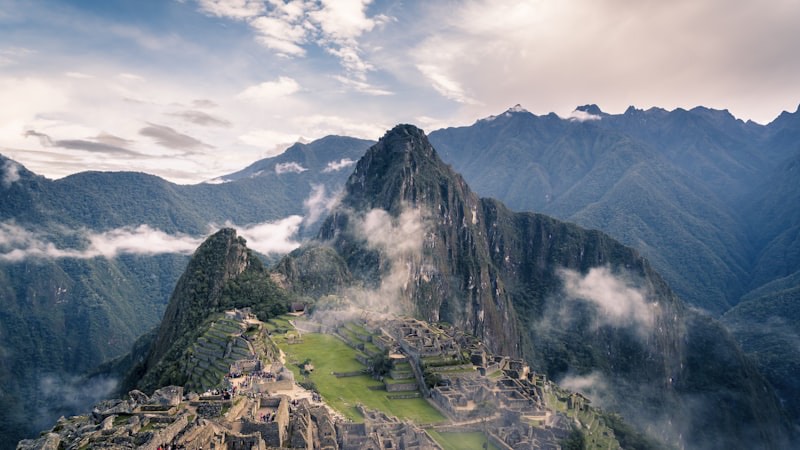
This one is more guesthouse than hostel, but the dorms are there and they’re good. What makes Wiracocha different: it’s owned and run by a Cusqueno family who have been in the hospitality business for 20 years and know everything about the Sacred Valley, Machu Picchu logistics, and what the inca trail actually involves versus the marketing version.
I was trying to navigate the Machu Picchu train and ticket situation, which is genuinely complicated. The woman at the front desk spent 45 minutes with me going through options. No hotel in Cusco gave me anything close to that.
Dorm beds: $15. Private rooms: $45.
Home Suites, Buenos Aires, Argentina
Buenos Aires is an exception: the city has some of the best apartment rentals in South America, and the competition makes the hostels here work harder. Home Suites in Palermo has private rooms that genuinely compete with boutique hotels on design while the dorms are clean and quiet by the standards of the form.
Palermo is the right neighborhood: parks, restaurants, bars, a weekend market at Plaza Serrano that’s one of the better things to do in the city for free. The hotel strip near Recoleta has more famous addresses but worse access to where Buenos Aires actually lives.
Private room: $68. Dorm: $22. The nearby hotels in Palermo were $75 to $120 for rooms with less personality.
Hostel Cumaná, Santiago, Chile
Santiago surprised me as a hostel city. I expected the quality to be lower than Bogota or Buenos Aires. Hostel Cumana in Barrio Italia proved me wrong.
Barrio Italia is Santiago’s best neighborhood for food and street art. The hostel occupies a converted house with a garden and a kitchen that guests genuinely use. I cooked most nights because the local produce market two blocks away was excellent and cooking was more interesting than eating out.
Dorm: $19. Private: $55. The neighborhood hotels were $80+, less personal, in buildings without gardens.
The Dragonfly Hostel, Cartagena, Colombia
Cartagena’s Old City is expensive. Hotels inside the walls start at $120 for something decent. The Dragonfly is just outside the walls in Getsemani, a five-minute walk from the main gate, in a neighborhood that’s more interesting than the tourist-polished interior anyway.
The rooftop is outstanding. Views of the Old City from outside are arguably better than the views from inside it. Daily hammock time, excellent Colombian breakfast, staff who’ve lived in Cartagena their whole lives.
Private room with AC: $65. Dorm: $20.
Viajero Hostel, Montevideo, Uruguay
Most travelers skip Montevideo. I’d recommend they stop skipping it, and Viajero is why I stayed five nights instead of two. The Ciudad Vieja location puts you in the middle of one of South America’s most underrated historic districts, and the hostel has a working kitchen, a genuine bar, and a crowd of long-stay travelers who’ve stopped rushing.
Private room: $58. Dorm: $18.
Montevideo hotels in the equivalent price range were fine but anonymous. Viajero had 10 years of accumulated local knowledge in the staff and a community that made the city more navigable.
What Made the Difference
Looking back at all eight: the staff. Every hostel on this list had someone at the front desk or behind the bar who genuinely wanted guests to have a good trip and gave specific, honest advice rather than booking commissions.
That’s the thing hotels mostly can’t replicate at the $40 to $80 price point. The information asymmetry is real, and a hostel with good community culture closes the gap.