Three cities I’ve spent significant time in as a solo traveler. All three are genuinely excellent for solo travel. All three have a neighborhood where you should be based and several where you shouldn’t. Here’s the direct answer for each.
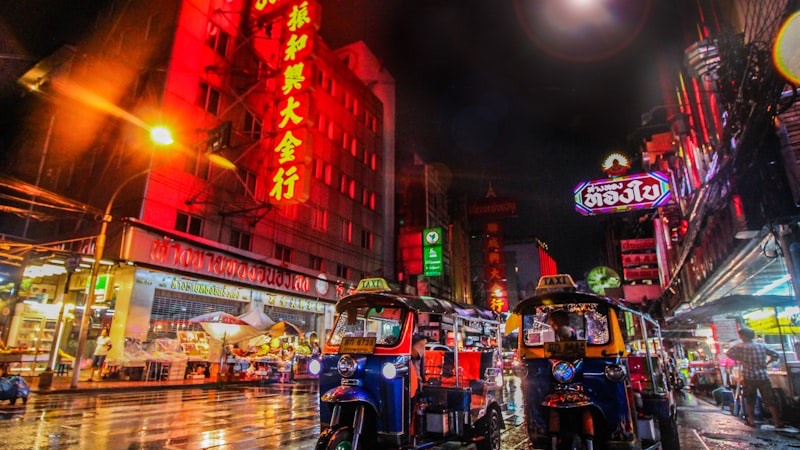
Bangkok: Silom or Ari. Not Khao San Road.
The Khao San Road area is for people who want to be around other backpackers. If that’s you, it’s fine. The guesthouses are cheap, the party infrastructure is built for solo travelers connecting with strangers, and the area is safe in the way that heavily touristed areas generally are.
But if you want to actually be in Bangkok rather than in a Bangkok-flavored tourist environment: Silom or Ari.
Silom: The BTS station makes the entire city accessible in 20 to 40 minutes. The neighborhood is a mix of business district and a cosmopolitan quarter around Soi 4, which creates a relaxed atmosphere that’s genuinely welcoming to solo travelers. Good street food on Silom Road itself. Lumphini Park is a 10-minute walk: 58 hectares of greenery in the middle of the city, genuinely pleasant at 6 to 7 AM before the heat hits.
Hotel options in Silom at the mid-range: 1,200 to 2,200 THB for clean, well-positioned rooms. The Narai Hotel is an older property that’s been consistently good for solo travelers: proper room sizes, helpful staff, easy BTS access.
Ari: North of the tourist zones on the BTS Sukhumvit Line. Younger local crowd, independent coffee shops (not Starbucks), excellent food within a 10-minute walk. Less international-facing than Sukhumvit, which makes it more interesting if you’re comfortable in more local environments. Prices for accommodation run 10 to 20% below Sukhumvit equivalents.
Taipei: Da’an District, Close to MRT
Taipei is the easiest city in Asia for solo travel. The MRT is clean, frequent, punctual, and covers the city thoroughly. The city is safe at any hour. The food culture centers on solo dining: night market stalls, individual portions, counter seating at small restaurants. It’s built for your trip.
Da’an District is where I base myself. MRT stations (Daan, Xinyi-Anhe, Technology Building) are within 5 minutes walk. The area around Da’an Forest Park has good hotel and guesthouse options at 1,800 to 3,500 TWD per night ($60 to $115 USD). The park itself is legitimately pleasant: people exercise, read, and exist in it normally throughout the day and evening.
The Da’an and Xinyi road area has what you need within walking distance: 24-hour Family Mart and 7-Eleven for any midnight food emergency (both are genuinely good in Taiwan), an excellent ramen concentration around Jilin Road, and proximity to the Yongkang Street pedestrian area for the best beef noodle soup in the city.
Zhongshan District is the alternative: slightly more business hotel-focused, good transit access, close to the Shilin Night Market by MRT. Works well. Just slightly less interesting as a neighborhood than Da’an.
Avoid: Zhonghe and Xinzhuang on the western MRT lines. These are residential suburbs that work fine for commuters but add 30 to 40 minutes transit time to everywhere you’ll want to go.
Seoul: Hongdae Area for First Visits, Yongsan for the Second
Seoul’s geography requires some explanation. The Han River divides the city roughly in half. Gangnam (south of the river) is the wealthy business and shopping district. Gangbuk (north of the river) is the historic and cultural center, older neighborhoods, cheaper in most categories.
Hongdae (Mapo-gu): For a first visit, the Hongdae area is the right base. The Gyeongui-Jungang Line and the Airport Railroad both pass through Hongik University Station, making Incheon Airport direct without a transfer (50 minutes to the airport). The neighborhood is young, the nightlife is active, and the density of affordable food options in Sinchon and Yeonnam is excellent.
Hotels in the Hongdae area at mid-range: 80,000 to 140,000 KRW per night ($59 to $103 USD). The Travelodge Hongdae and similar mid-range properties are well-managed and solo-traveler-friendly.
The downside: Hongdae is loud on weekends until 3 to 4 AM. Book rooms facing away from the main streets and above the third floor. Or use earplugs.
Yongsan-gu (for second and subsequent visits): Between Hongdae and central Seoul, the Yongsan area (particularly around Itaewon and the Haebangchon hillside neighborhood above it) is more interesting for people who already know Seoul’s main attractions. More international, more diverse dining, a genuine mix of Korean and foreign residents.
The Common Principle Across All Three
Every good solo travel neighborhood has: an efficient transit hub within 10 minutes walk, a 24-hour food option within 5 minutes (essential for irregular schedules), and a walkable core that means you can exist without navigating transit for basic needs.
In Bangkok that’s BTS access and the food infrastructure within any busy neighborhood. In Taipei it’s MRT plus the convenience store network. In Seoul it’s the subway and the pojangmacha street food stalls.
Get those basics right and the city opens up. Everything else is a matter of what kind of city you want to be in.